Alan Zendell, November 9, 2024
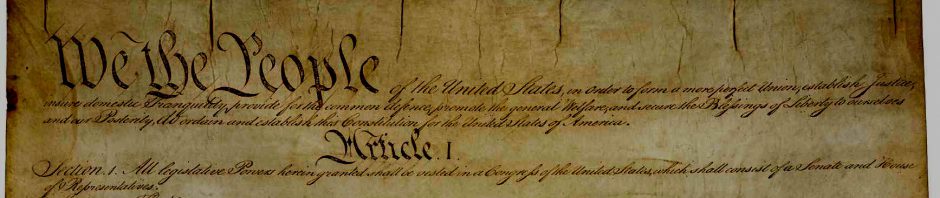
The struggle to find the right balance between federal power and states’ rights dates back to the years preceding the first American Revolution. In 1787, our Founders drafted the Constitution, based “on a new theory of federalism, a system of shared sovereignty that delegates some powers to the federal government and reserves other powers for the states.” The federal government could maintain an army, levy taxes, manage interstate commerce, and create currency, and the Tenth Amendment limited the power of the federal government to those things explicitly granted to it in the Constitution.
That sounds simple enough, but federalists and states’ rights advocates have been fighting to define state and federal power for two hundred fifty years. In our modern, post WW2 era, Democrats have generally been viewed as advocating a large, powerful federal government, while Republicans have cast themselves in the role of defending the powers of the individual states. Every piece of landmark legislation and related Court ruling in the thirty years after the war ended reflected this fight: desegregating public schools, the social security system, welfare programs, health care systems, legaliization of medical cannabis, and Roe vs Wade. To add to the fun, in what may turn out to be an extended fight in the Supreme Court, Article 6 defines the supremacy of federal law over state statutes wherever they conflict.
The struggle to define state and federal power intensified during the Biden administration. When the Supreme Court issued the Dobbs decision, effectively reversing Roe vs Wade, it said decisions regarding abortion should be the province of the states. When States like Texas and Florida tired of the federal government’s inability to pass a new immigration law, they began enforcing their own policies in defiance of federal law. Welfare, Medicaid, Medicare, and the Affordable Care Act have been a constant battle since the inception of those programs with states implementing their own conditions and modifications. The one constant in all of that was Conservatives (Republicans) attempting to weaken or repeal federal programs, while Progressives (Democrats) were fighting to strengthen them.
One of the first reactions to Trump’s re-election was the immediate reversal of the federalist/states’ rights roles of the major parties. Trump has not been shy about declaring himself a strong leader who prefers an authoritarian central government with him in charge wielding absolute power. It appears that the first test of his power will be his plans to deport millions of undocumented immigrants, which instantly shaped up as the first of many new skirmishes in the war between federalism and state autonomy. The difference is that now, the blue states, those dominated by Democrats will be fighting to expand states’ rights.
California Governor Gavin Newsom fired the first salvo in the coming conflict when he convened a special session of the State Legislature to begin on December 5, 2024, “ahead of another Trump presidency to safeguard the state’s progressive policies. Meanwhile, attorneys general in blue states across the country announced they were also gearing up for a legal fight.” In Newsom’s words, the states intend to “Trump-proof” their own laws. That means a new army of lawyers working for the states. We can only hope the states cooperate and pool their resources.
Trump promised that he would completely upend and rework the federal government, floating the idea that his new strongest ally, Elon Musk, will be given the responsibility and authority to cut $2 trillion in federal spending, which could decimate entire government agencies and leave the recipients of the programs they manage high and dry. That would also have an enormous impact on state governments, which would have to decide whether to extend those programs at state expense.
However this turns out, Trump has already scored a huge “success” within two days of winning the election. He completely reversed the course of federalism and the battle for states’ rights, implicitly enshrining the blue states as the champions of programs that are popular with at least two-thirds of Americans. That kind of success probably wasn’t what he had in mind, and it’s an important reminder that undermining American democracy may not be as easy as he thinks – or as half the country fears.
If, like me, you needed a while to get over the shock of Trump’s victory, it’s time to wake up and shake off the malaise. Even with both houses of Congress in Republican hands, the battle is far from over. The talking is done, and now the MAGA people have to govern. Since the economic impact of most of Trump’s proposals would be devastating, he may have triggered an inhouse brawl among his own party. The fight hasn’t begun yet. This is the wrong time to throw in the towel.


 America the Beautiful