Alan Zendell, March 15, 2025
I began my undergraduate career at Columbia University as a naïve, seventeen-year-old Jewish kid from Brooklyn. In 1960, Columbia was an elite university, an Ivy League school ranked with Harvard, Yale, Princeton, Stanford, and the University of Chicago. Being in New York, it was always a mecca for protests and demonstrations. Fifteen years after the end of World War 2, the Cold War was already underway, and the Soviet Union had forged ahead of the United States in the space race. With misplaced fears that whoever controlled near-Earth space would have a huge military advantage, young people were mostly concerned with avoiding a nuclear war.
Columbia believed in free expression; years before Civil Rights became law, the university supported diversity and enlightened free speech. It was my first exposure to a world in which I felt free to speak out against things I disagreed with. It was mind-expanding and freeing in a way I’d never known before. In the early sixties, our campus protests focused on the ROTC program, which in retrospect seems kind of silly, but that isn’t the point. The three thousand young men who attended Columbia College were learning in real time what it meant to grow up in America.
We were also learning about finding a balance between freedom of expression and personal responsibility. It was okay to be angry and express our anger in speeches and marches. It was not okay to destroy public property or injure people. It was also not okay to march and protest but not listen to what the other side had to say. To be honest, it was also fun, until October 16, 1962, when our play-acting at solving real world issues ran into the Cuban missile crisis. The campus where we had marched and given voice to whatever we disagreed with was suddenly a scene of more than a thousand terrified young people listening to our transistor radios to find out if we were about to be nuked.
The obvious incompetence and lack of transparency with which the Kennedy administration handled that crisis changed everything, and our attention switched to our growing involvement in the mess the French left us in Vietnam. Fears of a guerilla war in Asia began to dominate campus protests, and in the years after I left Columbia, a protest movement instigated by the radical Weather Underground and Students for a Democratic Society, led by Mark Rudd, took shape.
In 1968, students occupied campus buildings and completely disrupted the business of the university. They were angered by the school’s military research which they believed was supporting the growing war in Vietnam and by alleged instances of racial segregation. The university showed great restraint, at first, but eventually had to ask the NYPD to clear the campus. The university adhered to its support of free speech, taking action only after the demonstrations prevented it from functioning.
After students attempting to defend the university blockaded the protestors, police used tear gas to break up the demonstrations, resulting in 150 injuries, including twelve police officers. Compare that to the current protests by Palestinian activists angry over the war in Gaza. They were loud and intense, resulting in many Jewish students and faculty feeling unsafe on campus. It was an ugly, regrettable scene that re-opened religious and ethnic wounds that go back two thousand years. Antisemitism is not new. Neither is the plight of Palestinians who have fallen prey to Islamic terrorist groups.
Columbia became the focus of protests at universities all over the country, but it’s essential to remember that compared to 1968, what happened at Columbia in 2025 was relatively benign. The larger problem is a President who is mad with power, who believes he has the right to tell schools and universities what they are allowed to teach, who is using the unfortunate situation around Palestinian grievances to further his autocratic agenda. As awful as the events of 1968 were, no one in Lyndon Johnson’s White House attempted to abridge the principle of free speech on which our society is based.
That is precisely the issue here. Antisemitism, while awful, has little or nothing to do with Trump’s attempt remake American values, and American Jews would be foolish to believe Trump’s actions are about protecting them. Trump only believes in free speech if the speaker agrees with him. Restricting free speech is the surest way to destroy America.
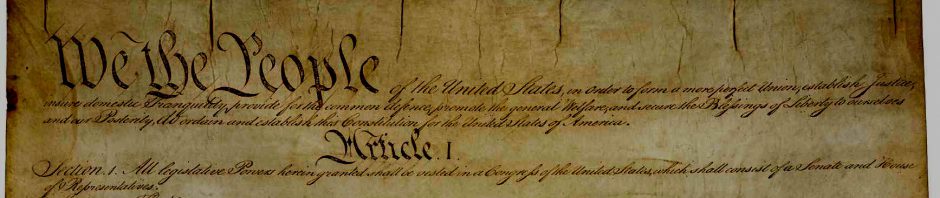
Let’s ask America’s first Jewish Supreme Court Justice, Louis Brandeis, what he thinks. Brandeis wrote that only a dire emergency justified restricting free speech. He believed that until such time as there is an overt threat of violence, “the remedy to be applied is more speech, not enforced silence…[and] we have nothing to fear from the demoralizing reasonings of some, if others are left to demonstrate their errors and especially when the law stands ready to punish…criminal act[s].” “[F]reedom to think as you will and to speak as you think are…indispensable to the discovery and spread of political truth.”


 America the Beautiful
Alan, you wrote a superb post to show Columbia’s history of promoting free speech and diverse views underscored why free speech is critical to our society’s functioning as a democracy while spotlighting why Trump cares little about free speech. One item: the Cuban Missile Crisis occurred in 1962. I agree Trump cares nothing about Jews especially when they are inconvenient to his need for power. He welcomed Jared Kushner into the family because of Jared’s father and Jared’s wealth. Trump surrounds himself with wealthy Jews because Jews truly are smarter than everyone else!