Alan Zendell, March 1, 2026
In 1940 and 1941, World War 2 was already underway with a divided America attempting to avoid direct involvement. The Germany-Italy Axis was intent on subjugating all of Europe under Fascist regimes like their own, and Japan had been ravaging China and French Indochina (Vietnam) for a decade. The Roosevelt administration was split on how to proceed, as was the Japanese government. Neither side wanted to be at war with the other, and military leaders in Japan believed they could not win a long-term conflict with the United States.
In an eerily familiar scenario, Roosevelt reacted to Japan’s aggression by imposing sanctions that included suspending oil shipments which were essential to Japan’s success in China. Unlike Germany and Italy, Japan was a resource-poor nation that depended on vital imports. Japanese Prime Minister Konoye elected a two-fold approach to dealing with the United States: attempt to negotiate an end to sanctions in exchange for limiting Japan’s aggression in Asia, while secretly engaging in Naval war games in preparation for a sneak attack on Hawaii.
Negotiations stalemated, leaving the Japanese resigned to war, but knowing they could only endure if they eliminated the American Navy. Thus, with a negotiating team in Washington pretending to seek a solution, Japan launched the attack on Pearl Harbor. President Roosevelt’s Day of Infamy speech did more than ask Congress to declare war on Japan. It claimed that the Japanese had approached him duplicitously when they claimed to want to avert war, while his administration had sincerely wanted peace.
Of course, the reality was a lot more complicated, but overall it appears that Israeli Prime Minister Netanyahu and American President Trump approached their attack on Iran in much the same manner as the Japanese approached Pearl Harbor. So much for the moral high ground and Trump’s questionable claims that Iran was only months away from being able to attack us with missiles possibly tipped with nuclear warheads after declaring in June that we had obliterated them.
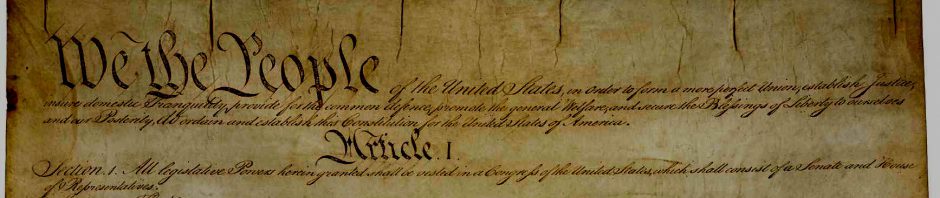
Neither Netanyahu nor Trump would ever have been satisfied with a newly negotiated nuclear deal with Iran. They were both intent on regime change from the outset, and as many commentators have noted since the attacks began, lacking a credible threat of impending attack by Iran, and without support from either Congress, the United Nations, or a coalition of allies, Trump and Netanyahu’s decision to go to war was a violation of both international law and the U. S. Constitution.
There is no doubt that the world will be safer place if the oppressive theocratic Iranian government is replaced with one that prefers to coexist with its neighbors and forego religious fanaticism. There is no doubt that the current Iranian regime was evil and responsible for terrorist acts and insecurity all over the Middle East. It’s also extremely likely that at some point, pre-emptive action to neutralize the threat Iran posed was inevitable. There is no debate about any of that, nor is our obligation to defend Israel in question. The critical issues today are how the decision to attack Iran was made and in the absence of any clear path forward after the decapitation of Iran’s leadership, whether the spectacular show of force that produced our early successes will ultimately improve conditions for either the Iranian people or the region.
The American and Israeli militaries have proved themselves to be efficient and effective, seeming to vindicate their claims of being the best in the world. Our political leaders, however, have not. Both Netanyahu and Trump had competing self-serving motives for initiating the attack. One might justify acting preemptively based on the opportunity to take our much of Iran’s leaders in a single strike, but opportunism isn’t either a sound military or diplomatic strategy.
In the hours following the attack, many important questions have been raised that require answers before we’re drawn into a wider conflict we can’t control. Is there reason to believe that the Iranian people are either prepared or able to overthrow their authoritarian government as Trump urges them to? Can that be achieved without American troops in combat in the Middle East again? Will the precedent of initiating and carrying out operations that could lead to open-ended conflict without Congressional support do permanent damage to the constitutionally required separation of powers?
Finally, what of Mr. Putin and Mr. Xi? What effect will impulsive, unlawful military strikes by the United States and Israel have on the credibility of Trump’s pretense of wanting a fair resolution to Russia’s invasion of Ukraine. Is the attack on Iran an invitation to China to invade Taiwan? Trump fantasizes dividing the world into three spheres of influence with his two principal adversaries. In such a world, three supreme monarchs would be free to do anything they pleased, unaccountable to anyone.
The real threat to our future is Trump’s dream of an expanded Trump-Monroe Doctrine that grants him complete dominion over the Western Hemisphere and oil interests in the Middle East, which differs only in detail from Putin and Xi’s lust to control Europe and Asia without interference from the United States.


 America the Beautiful