Freedom

Alan Zendell, August 31, 2021

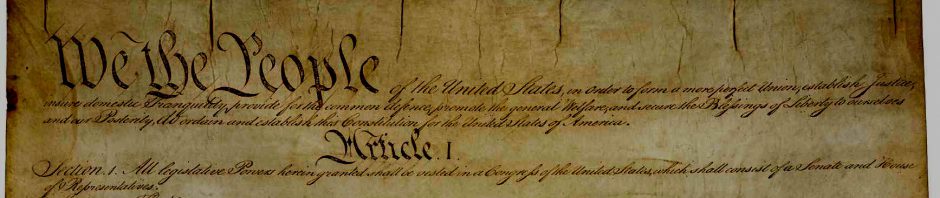
One of the first things we Americans learned as children was that we lived in “the land of the free and the home of the brave.” We heard it repeatedly until it became a mantra, and like all mantras, slogans, and mottos, the individual words lost their meanings over time, replaced by generalized notions that can be dangerous – dangerous because there is no such thing as complete freedom, and bravery has nothing to do with chest beating and mob rule. We do not have the inalienable right to do anything we please regardless of how it impacts other people.

When we first encountered laws and rules, we pushed back. We didn’t like being told what we could and couldn’t do, we resented authority. And when we disobeyed our parents and teachers or broke rules we were presented with the dichotomy of civilization versus the jungle. The jungle became a metaphor for living free, while discipline and regulation meant being civilized. Like most overgeneralizations, they represented a false choice.

When we were kids, jungles looked like fun. With no parents, teachers, or police around, we could do whatever we wanted, swing from vines, make friends with animals, and never have to be concerned with earning a living, getting sick, or having to follow rules. Except that real jungles aren’t like that. Everything living in a jungle has natural enemies and predators. Every living creature is constantly on its guard to avoid being eaten by something bigger, stronger, or deadlier.

We learned over several millennia that to survive we had to form communities and cooperate. Cooperation meant accepting restrictions on our freedoms in exchange for mutual security, a dependable supply of food, and protection against everything trying to kill us. But something went terribly wrong. We didn’t all define freedom the same way, and many of us forgot or never learned that with freedom comes responsibility and a very real cost.

Freedom is one of the most abused words in our language. I will never forget President Lyndon Johnson telling us that we had to defend “the freedom-loving people of South Vietnam” against the Communist menace, when all most of them wanted was to be free of colonial interference. A generation later, we were told that Iraqis wanted to be free of oppression by Saddam Hussein, Afghans were desperate to be free of their religious autocracy, and Iranians wanted to be free of the tyranny of Sharia law. After hundreds of thousands of casualties, wasting trillions of dollars, and creating serious divisions at home over decades of wars, it turned out that all those oppressed people had no interest in what we called freedom.

We’ve learned a painful lesson about trying to define freedom for other nations. And now we’re faced with what may be a worse issue within our own borders. Politics and craven, incompetent leaders have so distorted our notions of freedom that we are now at war with ourselves. Somehow, the Second Amendment to our Constitution, which was intended to prevent tyranny by an autocratic central authority over states’ rights, has for many, come to mean armed intimidation of elected authority. Worse, freedom has come to mean the right to be ignorant and ignore science.

Thus, we allow those who would profit from our foolishness to convince us that no one has the right to tell us we can’t pollute our air and water, permit our planet to become uninhabitable or protect each other against a raging pandemic. When nearly half our citizens consider essential public health measures unconstitutional restrictions of their personal freedom, something is terribly wrong in our country. When an elected state representative in Georgia can actively, openly agitate for continued armed insurrection against state and local governments because he believes mask mandates to protect our children in school and vaccination against a deadly disease represents tyranny, we ought to be seriously questioning our future.

Donald Trump and his patrons at Fox News proved that when a vocal minority of our citizens abandons critical thinking and adopts intellectual laziness as a way of life, (think Facebook,) they can be propagandized and instigated to believe that anyone who thinks differently from them is their enemy, and that any trouble or problem they face is the fault of “those people.” If you’re not sure who those people are, substitute every minority or dark-skinned immigrant or anyone else ignorant people can be convinced to hate.

The first two years of the Biden administration may well define our future. If the forces of decency and rational behavior are allowed to succumb to the madness unleashed by Trump and his supporters, we are in danger of destroying everything we’ve spent two hundred fifty years building.


Posted in Articles | Tagged , , , , , , , , , , , , , , , , | 1 Comment

Best Laid Plans – Two Striking Contrasts

Alan Zendell, August 22, 2021

The City of New York and the effort to wind down our military involvement in the war-torn (so-called) nation of Afghanistan both faced daunting challenges of Intelligence gathering and logistics over the last few months. The consequences of potential failure weren’t comparable in the two situations, but there were striking comparisons. Both demonstrated what can happen when Intelligence information is flawed or incomplete, and both were examples of how unforeseen events can undermine even the best plans.

In Afghanistan, the challenge was to move tens of thousands of people, both Americans and Afghans fleeing the Taliban, out of the country ahead of the advancing Taliban forces. In New York, one of the most crowded cities in the world, the challenge was to move tens of thousands of people in and out of Central Park and provide a secure environment for a five-hour concert celebrating the city’s recovery from the COVID pandemic. Totally different goals, but strikingly similar in some ways.

One thing we saw in both places was a catastrophic failure of Intelligence, one understandable, the other, not so much. Afghanistan was the latest in an abysmal six decade track record of failure of military and diplomatic Intelligence that includes Vietnam, the 1993 attack on the World Trade Center, nine-eleven, and our invasion of Iraq and Afghanistan. New York needed to find a way to hold a massive concert without having it turn into either a riot or COVID super-preader, or a terrorist attack.

The Intelligence failure in Afghanistan was largely an American problem, but other NATO countries were equally guilty. I appreciate the logistical nightmare facing our military, but I cannot grasp the incompetence of our Intelligence efforts. We flooded Afghanistan with tens of thousands soldiers, marines, contractors, diplomats and intelligence agents. Germany and the UK did the same thing on a smaller scale, and those personnel were supported by continuous satellite, aircraft, and drone surveillance.

How is it possible that all those assets failed to observe 60,000 Taliban fighters mobilizing around the country? How could our operatives on the ground fail to have noticed the Taliban systematically dominating regional warlords all over this tribally divided country in preparation for an assault on Kabul? And how, after working closely with and training the Afghan military, did our people fail to realize that the departure of American forces would leave Afghan defenders feeling betrayed and unwilling to fight for their own government?

Those missteps and the failure to plan for the possibility that the corrupt Afghan government would cut and run are responsible for the chaos and human tragedy that is visible to the entire world. I believe we’ll get through this in the end, because it’s in the Taliban’s interest to honor their agreement for safe passage and avoid horrific images of civilians being beaten and killed. And the Taliban depends heavily on financial aid from outside Afghanistan, most of which has been frozen by NATO countries.

My intention is not to harp on failures that are obvious to everyone – it’s to shine a light on the success of New York City. While New York wasn’t facing a military disaster, its attempt to provide a badly needed spiritually uplifting experience for all Americans faced enormous logistic and planning issues. Gun violence and mass shootings have been on the rise for decades, and Homeland Security repeatedly warns that the greatest threat to our nation is domestic terrorism. In the past year, we witnessed demonstrations result in violence and death, culminating in the insurrection at the Capitol. And we’ve seen reckless, politically motivated actions and decisions that sought to deny and ignore the deadly effect of the pandemic.

But New Yorkers overcame all that, and for a couple of hours, the city put on a picture-perfect event that achieved all of its objectives. Each of the 60,000 attendees had to show proof of COVID vaccination and a negative test for the virus before being allowed in, and the concert was the complete antithesis of the divisiveness and political rancor that has kept us from moving ahead with the nation’s business. For three hours, the world saw pure joy, among the well-behaved crowd, the performers, and the security personnel who were largely invisible. The first hour, with the New York Philharmonic Orchestra supporting brilliant performances by Andrea Bocelli and Jennifer Hudson were uplifting and beautiful, illustrating what we’re capable of when we set our minds to getting it right.

In the end, the one thing beyond everyone’s control, Hurricane Henri, cut the festivities short. But even there, New York shone. The ease and efficiency with which the entire crowd was safely, calmly evacuated in the face of potentially dangerous storms demonstrated that the event planners had prepared for every contingency. We’ll live with the anxiety and stress of Afghanistan a while longer, but for part of one evening, we were reminded of how we look at our best. Maybe the military should have hired Clive Davis, the record company executive who planned and managed the New York concert, to get our people out of Kabul.

I have no doubt that the crowd in Central Park exceeded the one at Donald Trump’s inauguration, both in numbers and joyousness. Way to go, New York!

Posted in Articles | Tagged , , , , , , , , , , , , , | 2 Comments

Why Parents With Disabilities are Starting Businesses (and How You Can Too)

Ed Carter, August 19, 2021

Ed Carter is a retired financial planner who uses his expertise to help people with disabilities plan ahead, as physical and mental disabilities often cause stress and confusion when it comes to financial planning. As we emerge from COVID, with millions still looking for ways to support themselves and their families, Ed’s ideas are more important than ever. You can email him at edcarter@ablefutures.org.

Finding the right career opportunity is tough when you have a disability. Even with the protections offered under the Americans with Disabilities Act, disabled jobseekers face barriers including lower educational attainment, higher levels of poverty, and misconceptions about what it means to have a disability.

For mothers with disabilities, the job market is even bl.eaker: Mothers experience significantly lower callback rates than childless applicants across industries due to assumptions about a mother’s commitment to her career.

With so much stacked against them, it’s no surprise that self-employment is a popular career choice for mothers with disabilities. More than half of working women with children are interested in entrepreneurship. That number rises even higher among women with disabilities who are disadvantaged in the traditional labor market.

Starting a business offers flexibility, autonomy, and limitless earning potential, but it also comes with challenges. Not only do first-time business owners lack the know-how, but they also struggle to find money to start a business.

Luckily, there’s never been more help for aspiring entrepreneurs. If you want to become your own boss but don’t know where to start, use these tips to set your plan in motion.

1. Choose an easy business to start

The best businesses for first-time entrepreneurs are low-risk, low-cost, and scalable. As a parent with a disability, it’s also important to choose a business that fits your lifestyle. Do you need the ability to work from home, run your business part-time, or take time off during holidays and summer breaks?

These limitations may clash with a brick-and-mortar business, but there are lots of business ideas with the flexibility you need. Ideas include:

  • Cleaning services.
  • Pet sitting.
  • Property management.
  • Virtual assistant.
  • Social media management.
  • Website design.
  • Tax preparation.
  • Tutoring.
  • Writing/blogging.
  • E-commerce dropshipping.
  • eBay selling.
  • Pop-up shops.

2. Legally start your business

Most self-employed people operate as a sole proprietorship or a limited liability company. You don’t have to file any paperwork to establish a sole proprietorship. However, you do need to file a DBA (“doing business as”) if doing business under a name other than your personal name. Filing a DBA is a fairly straightforward process, but some states do require publishing your DBA in local newspapers.

Starting an LLC is slightly more complex, but still easy enough to do yourself. In addition to naming your business, registering an LLC requires completing Articles of Incorporation and paying filing fees.

Once your legal business entity is established, you can apply for an Employer Identification Number (EIN) and open a business bank account. Your state, county, or city may require additional business licenses and permits. Contact your local Small Business Development Center or city clerk to determine what’s required in your state.

3. Find Startup Capital

Even an affordable business idea requires money to start. You need to set up an office, purchase assets and supplies, and pay the initial fees to start your business. After calculating your startup budget, compare funding options to find the best fit.

Your talents may be underappreciated in the job market, but the truth is, few people are more resilient, industrious, and creative than parents with disabilities. If the workforce isn’t working for you anymore, take the opportunity to do something different. Starting a business just might be your family’s path to a brighter future.

  • Family and friends are an important source of startup capital for many entrepreneurs. A promissory note protects all parties when taking a loan from family and friends.
  • Borrowing money from your 401(k) or IRA is an option if you have a nest egg from a previous career. However, borrowing from your retirement isn’t risk-free.
  • While qualifying for business loans is challenging as a new entrepreneur, you may be able to get a business credit card for startup expenses. The best options offer 0% introductory APR and cashback on purchases.
  • Special funding programs are available to disadvantaged entrepreneurs including microloans for entrepreneurs with disabilities and assistive technology business loans. Women entrepreneurs can also apply for free money through grant programs like the Amber Grant.
Posted in Articles | Tagged , , , , , , , , | 1 Comment

Kabul, a Disquieting Echo of Saigon

Alan Zendell, August 6, 2021

“Do not let my party pretend to be outraged by this. Both the GOP and Dems failed here. Time for Americans to put their country over their party.” That was Representative Adam Kinzinger (R, IL) on the diplomatic and military disaster of Afghanistan. Kinzinger, an Air force veteran who served in Afghanistan, criticized former President Trump for announcing that all American forces would be withdrawn by May, 2021 and current President Biden for following through with that promise. Kinzinger claimed neither president had a withdrawal plan and predicted it would end in disaster.

If you’re watching TV, it looks like Kinzinger was right, but let’s take a step back. The truth is, our time in Afghanistan couldn’t have ended any other way. The current debacle was inevitable and predictable. The Afghan government only survived for the last twenty years because it was propped up financially and militarily by the United States; it never had a chance. Whether the Taliban defeated it in sixty days, as intelligence reports predicted, or in three, as it turned out, it was going to happen. The fact that the government collapsed so suddenly, ceding the country to the Taliban, simply reflects how wrong-headed our mission there was.

Amid this high emotion, let’s examine some facts. We spent more than a trillion dollars in Afghanistan, trained an army of 300,000, and helped them build an air force. Our sacrifices included more than 2,000 dead and 20,000 injured, not to mention the wasted resources that could have funded our badly needed infrastructure program. What we got in return was the pyrrhic victory of the assassination of Osama bin Laden and a stain on our diplomatic and Intelligence record that we will regret for decades.

Afghanistan is a complete failure of Intelligence, diplomacy, and strategy, and more than a little corruption. The ruins of the World Trade Center were still smoldering when we invaded. Americans were reeling from the nine-eleven attack, angry and scared. Our leaders, the media, and a majority of us demanded revenge, and the Bush administration succumbed to that bloodlust and invaded the wrong countries.

The decision to begin our twenty-year war in Afghanistan and Iraq was a continuation of the policy begun during the Reagan administration to support Sunni Arabs over Shias, who overthrew the Shah and control Iran. Many of our leaders, including the Bushes, have had close ties with Sunni Saudi Arabia, which has long vied with Iran for control of the Arab world. Despite the facts that most of the nine-eleven terrorists were Saudis and bin Laden, himself a Saudi, was funded by Saudi money, our government convinced itself that fighting in Iraq and Afghanistan would avenge nine-eleven.

If you’re feeling déjà vu, you’re remembering our humiliating defeat in Vietnam. The chaos at the airport in Kabul, thousands of Americans and Afghans desperate to flee the Taliban, is frighteningly similar to our ignominious withdrawal from Saigon. In 1974, Americans and their South Vietnamese allies had to be evacuated by helicopter from the roof of the American embassy as the corrupt South Vietnamese government fled the country and the Viet Cong swarmed into the capital.

Despite our shame, we managed to reprise that disaster in Kabul, forty-seven years later. Not only were we fighting the wrong country, we had seen the Soviet Union bankrupt and destroy itself trying to occupy it in the 1980s. Afghanistan was Russia’s Vietnam; nine years of guerilla warfare and insurgency by Islamic clerics brought Russian forces to their knees. Russia, with shorter supply lines and a need to create a buffer between itself and Iran, demonstrated that occupying and reshaping Afghanistan was virtually impossible. Yet, we repeated their error.

The worst thing about the similarity between America’s failure in Vietnam and Afghanistan is that we chose the wrong side both times, propping up corrupt governments against determined insurgency. We fought in Vietnam because of the Domino Theory put forth by President Eisenhower in reaction to our paranoia over the spread of Communism. That fear blinded us to the reality that Ho Chi Minh was not a puppet of the either the Russian or Chinese Communists, but a populist leader who was trying to rid his country of European colonialism. The success of Vietnam today makes it clear that we were on the wrong side.

The same argument can be made in Afghanistan. Experts express shock that the Afghan army refused to fight the Taliban, but it was never committed to the Western style government we installed in Kabul. They signed up because we paid and armed them, not from any sense of loyalty. If they were truly opposed to the Taliban, they would have defended their country, but it’s likely that the Taliban represents the will of the majority of Afghans.

As President Biden correctly said, yesterday, we do not have the right to continue to try to influence how Afghans are governed, and there is no rational reason to continue to waste lives and resources there. It’s a horrible mess that seventy years of misdirected diplomacy made unavoidable.

Posted in Articles | Tagged , , , , , , , , , , , , | 2 Comments

Baby Steps – Signs of Progress

Alan Zendell, August 12, 2021

Nearly seven months into his presidency, Joe Biden faces more problems than he did when he took office. He inherited a nation plagued by divisiveness whose root causes go back to Colonial days, which his predecessor exacerbated for his own benefit. That divisiveness is more poignant today, exactly four years since the White Supremacist invasion of Charlottesville, Virginia. With the perspective of hindsight, the most significant memory of that day was then President Trump’s refusal to condemn a racist attempt to re-awaken a violent, fascist movement that had lain dormant waiting for a leader to deliver the endorsement they received when Trump said, “There are fine people on both sides.” There weren’t.

That divisiveness led to the perpetuation of Trump’s Big Lie, the January 6th insurrection, and a flood of red state laws attempting to assure that non-white Americans won’t vote in sufficient numbers to have a meaningful voice. I believe that if Congress does not pass the voting rights bills currently on its docket, it could spell the end of our constitutional democracy. But recent developments prove we face even greater threats from enemies that couldn’t care less about politics, and which could defeat our too-little too-late responses.

Today, the COVID pandemic and climate change are more dire threats than they were six months ago. It’s time Americans woke up to the reality of the damage they can cause to our society. Future historians may well look back on this year as our final opportunity to act responsibly to protect future generations. Today’s news makes the prospects seem grim.

Yesterday, senators from states whose economies rely on income from fossil fuels voted down an amendment to the $3.5 trillion budget framework that Democrats passed by a 50-49 margin, that would have cut off tax credits for fossil fuel production. Senators, led by Lindsey Graham (R, SC) claimed it would cause prices for gasoline and heating oil to skyrocket. They’re probably right, but this is a time for hard decisions. A few years back when oil prices tanked and gasoline sold for under two dollars a gallon, did you cringe a little while you were reaping those big savings as gasoline consumption went through the roof, setting back efforts to change to electric, non-polluting vehicles? The recently released report on the worldwide effects of climate change make rising fuel costs a small price to pay to protect our future.

Possibly worse, despite continual warnings from the entire medical and public health communities that while COVID had been set back by vaccines, masks, and distancing, the virus was still with us, we have not had the will to permanently put it to bed. If half our country remains unvaccinated, the virus will mutate into more contagious and deadly strains. The delta variant is already ravaging states that refused to mandate masks and vaccinations, and epidemiologists warn that far more dangerous variants may follow, including the possibility of airborne contagion.

Health care systems in Texas and Florida are already at the breaking point with thousands of children now hospitalized. Yet, Governors Abbott and DeSantis continue to pander to Trump’s base rather than protect their citizens. What happens when whole economies have to shut down again and our failure to act makes it unsafe to send our children to school? As finite resources run out, productivity falls, and supply lines degrade, how long before our economy collapses?

Despite all that, there are signs of progress, and President Biden is undeterred in pressing his agenda of saving America’s soul and substance. His first success was passing the $2.2 trillion CARES act last March. Four months of economic data since then show that our economy has added an average of over 800,000 jobs each month due to the stimulus it provided, not to mention that millions of households can pay rent and put food on the table.

Rather than try to kill the filibuster outright, Biden opted to keep his campaign promise of bipartisan government. It was risky, but his gamble paid off, as nineteen Republican Senators voted to pass the $1.2 trillion infrastructure bill. In return, holdout Senators Joe Manchin (D, WV) and Kyrsten Sinema (D, AZ) gave Democrats the one vote majority they needed for their $3.5 trillion budget package. These are significant victories, a light at the end of our tunnel of doom. But important as they are, they are only the first steps in getting us back on track.

The House still must act on both the infrastructure and budget reconciliation bills. The latter would “expand Medicare to include dental, health and vision benefits, and possibly to lower the program’s eligibility age from 65; fund a host of climate change programs; provide free prekindergarten and community college; create a paid family and medical leave program; and levy higher taxes on wealthy businesses and corporations.”

A tough road, fraught with peril, but our future depends on it. President Biden, who was accused of being too old, sick, and feeble-minded by Trump supporters, has thus far proven himself up to the task. There’s no sign that he’s about to slow down, either.

Posted in Articles | Tagged , , , , , , , , , , , , , | 3 Comments

Thank You To Our Civil Servants

Alan Zendell, August 8, 2021

Civil servants at all levels of government have often been the target of unwarranted attacks from the Right. Conservative Republicans (the real ones, not the Trump supporters) believe in small government, while politicians on the left believe governments have important responsibilities that cannot be farmed out to the private sector. I don’t know whether Ronald Reagan was being literal or just making a campaign speech when he said government can’t solve problems, government is the problem, but I’m certain he was wrong.

As both a contractor and a civil servant I spent almost forty-five years working for and with people at all levels of government. Especially at the state and county levels, I have never met a more committed, overworked, and underappreciated work force. Not as much at the federal level because politics and overzealous budgeting cause the size of the federal workforce to oscillate like a yo-yo. Since the 1960s, when Presidents Kennedy and Johnson greatly increased the number of federal workers, Republicans and Democrats have alternately tried to reduce and restore their numbers, for no substantive reason but out of political ideology.

There’s a reason government employment is call Civil Service. The vast majority of people who choose that career path take the word “service” seriously. While it’s true that the government provides excellent health care and retirement benefits, it’s also true that some of our brightest and most talented people choose service over jobs that pay far more than government salaries. And in addition to their talent and hard work, they possess a commodity that seemed to be going out of style since Trump entered the political scene: INTEGRITY!

Americans should thank whatever deity or force they believe in that the U. S. Department of Justice is populated almost entirely by people of that caliber. Political views and personal values aside, they have a special commitment to their jobs, and unfailing patriotism that may ultimately be what saves our democracy. They are people who place principle over politics, who are willing to resign in protest when ordered to act in a manner they consider illegal or unethical, and who are willing to fight internally to assure rules and laws are obeyed despite professional and personal threats.

We saw clear evidence of that in testimony before the Senate Judiciary Committee this week. The Committee is investigating whether former President Trump illegally attempted to overturn the 2020 election in violation of the Constitution in the ten weeks after the election. William Barr, who often appeared to cross the line between defending the Constitution and allowing politics to corrupt his Department, resigned as Attorney General on December 20, 2020, a month before President Elect Biden was to be inaugurated. Even Barr, whose actions aroused anger from both Democrats and his own senior professional staff, finally reached a point where he could no longer stomach having his personal legacy trashed by Trump.

Trump appointed Jeffrey Rosen to replace Barr, and according to testimony by Rosen and his Deputy, Richard Donoghue, spent the ensuing weeks pressuring the Justice Department to declare that the election was invalidated by fraud, despite all objective evidence to the contrary. They implicated another DOJ attorney, Jeffrey Clark as being at the center of a plot to declare the election void and turn it over to state legislatures which would have given Trump a victory along strict party lines in clear violation of the will of the people, who gave Biden a victory in the Electoral College and a margin of nearly eight million popular votes. It’s not clear whether Clark was acting on his own to support Trump or the former president was directing him, but Senate testimony made it clear that they were working together.

As first reported by the New York Times, three Senators, Richard Blumenthal (D, CT), Thom Tillis (R, NC) and Sheldon Whitehouse (D, RI) sat through eleven hours of testimony by Rosen and Donoghue, with several other (bipartisan) Senators participating. There was little disagreement over the actions of Jeffrey Clark. What remained in question was whether Clark had violated federal law or simply behaved unethically in violation of his oath to defend the Constitution. The DOJ Inspector General will make that determination.

Senator Blumenthal characterized the Committee hearing as “profound and important,” and later told CNN that he “was struck by how close the country came to total catastrophe” after listening to Rosen’s entire closed-door testimony. What he meant was that we all owe a debt of gratitude to the committed senior officials in our Justice Department for averting what would have been at a minimum, a serious Constitutional Crisis, and at worst the undermining of it’s most critical provisions, the fair election of a president.

Posted in Articles | Tagged , , , , , , , , , , , | 1 Comment

Global Warming as a Precursor to a New Ice Age

Alan Zendell, August 6, 2021

Climate change is a long process whose effects vary considerably both geographically and over time. The latest phase of climate change, popularly referred to as global warming, has been producing record high temperatures and storms that increase in violence and frequency in some places, and calm, lovely summer days elsewhere. On most days, there are many more high temperature locations than low ones, causing an average annual increase in global temperature.

One reason there is so much controversy over global warming and so many people willing to believe profiteers who want to convince them it’s not happening is that the place they live might have perfect weather on any given day. From that vantage point, it’s impossible to grasp the global impact. It’s much like election campaigns. If those who profit from spewing carbon into the atmosphere spend enough money trying to convince people that climate change is a left-wing hoax, many of them will be willing to believe last week’s record heat wave was just an aberration.

Actually, there’s a lot to worry about, and it’s not only more hurricanes and tornadoes, record droughts, raging wildfires that consume more forests and homes every year, and rising sea levels. If all that weren’t enough, there’s another issue on our horizon that could catastrophically affect all of us. The problem is well-known to scientists and oceanographers who’ve warned us about it for decades. Most people who hear it think it’s just another disaster scenario designed to scare us into changing the way we live, but it’s very real and even more of a threat than was thought a few years ago.

The issue is the systems of Atlantic Ocean currents that control temperatures in the northern hemisphere. That includes us. Ocean currents redistribute heat from the warmer regions in the Caribbean all the way north to Prince Edward Island in Canada, but global warming is making those currents unstable. (The link is to an article on CNN’s website, this morning, that explains the problem and reports on a just-published research report that is alarming scientists.)

Simply put, “The Atlantic Meridional Overturning Circulation (AMOC) — which the Gulf Stream is a major part of — helps maintain the energy balance in the Atlantic Ocean. It is often described as a ‘conveyor belt’ that takes warm surface water from the tropics and distributes it to the north Atlantic. The colder, saltier water then sinks and flows south.” The process depends on the fact that salt water is denser than fresh water, but melting ice caps and glaciers have been dumping fresh water into the Arctic Ocean at an increasing rate, part of a normal cycle of climate variation, but one that industrialization has accelerated.

As more fresh water mixes with northern oceans, their salinity decreases. Scientists have long warned that if this continued, the Gulf Stream would eventually become unstable and cease to flow. It’s the kind of esoteric warning that’s easy to dismiss, but the consequences of the loss of the Gulf Stream would be catastrophic to the United States and the world.

The Gulf Stream maintains the temperate climate of all of northeastern North America. If it were to suddenly cease flowing, the entire northeastern United States would be plunged into an endless winter. The result would be the formation of icepacks and glaciers from Maryland to Maine and north into Canada. Every northeastern city north of Richmond, Virginia would become uninhabitable within a few years – some scientists believe it could happen in as few as five.

According to today’s report, a “study, published Thursday in Nature and Climate Change, warned of an almost complete loss of stability of the AMOC over the course of the last century. Researchers say it could be close to a collapse … though the threshold for such a collapse is still uncertain.”

The 2004 film, The Day After Tomorrow exploited this phenomenon. The film was viewed by most people as just another disaster movie, because the specific situation it described, a virtually instantaneous collapse of the forces that warm us, didn’t seem believable. The movie portrayed a highly unlikely (though possible) scenario, but the result it showed, everything north of Washington under ice in just a few years is a very real possibility.

Between 2004 and 2007, Kim Stanley Robinson, a highly respected author of speculative fiction based on hard science, published the trilogy, Science in the Capital (Forty Signs of Rain, Fifty Degrees Below Zero, and Sixty Days and Counting) that chillingly and brilliantly described how the United States would be affected by the loss of the Gulf Stream.

Twenty years ago, scientists were already seriously worried that if the polar icecaps continued to melt, the loss of the Gulf Stream would eventually follow. We’re already close to the tipping point, and there is little reason to believe we won’t cross it. The ice caps are melting faster today than they have since the last ice age.

This is neither a joke or nor a scare story. It’s real, hard science. Take it seriously.

Posted in Articles | Tagged , , , , , , , , , , , | 2 Comments

Reality vs Science Fiction

Alan Zendell, August 5, 2021

Science fiction is a broad genre that examines countless visions of our possible futures. Some are complete nonsense – vampires, zombies, monsters devouring cities, dinosaurs coming back to life – they make for good action films but have little meaning otherwise. Alien invasions and extinction event-causing asteroids are possible, but unlikely, not the sort of things we worry about every day. But the good stuff, based on sound science or scientific theory, offers us windows into future social trends, explorations, discoveries, and human evolution.

As the effects of climate change intensify and we are wracked by pandemics, as automation produces chronic unemployment on a massive scale, and critical resources become scarce and prohibitively expensive, life on Earth will be under increasing pressure. Are those things combined likely to exterminate human life? Probably not, but they could have catastrophic effects on the sustainability of our societies, quality of life, and national economies.

In the worst case, billions of lives could be lost, and civilization could be set back to pre-industrial times. If history is our guide, there will be constant warfare and the loss of governments’ abilities to maintain order and protect their citizens. Life on Earth would be nightmarish.

But science fiction isn’t only about doom, gloom, and disaster. It’s mostly about hope and optimism and challenge and accomplishment. It’s about providing productive arenas for humanity’s restless energy and need to improve and excel, to improve society and sustain economies without resorting to war. It is, in fact precisely what John F. Kennedy meant sixty years ago: “We choose to go to the Moon … and do the other things, not because they are easy, but because they are hard, because that goal will serve to organize and measure the best of our energies and skills, because that challenge is one that we are willing to accept, one we are unwilling to postpone, and one which we intend to win …”

Exploration and expansion resulted in some awful things: wars, the destruction of entire civilizations and cultures, and slavery to name a few. But they are also what enabled our industrial and technological development. Human societies must constantly evolve and improve themselves or stagnate. As I wrote in The Billionaires’ Space Race, the search for other places that can sustain human life is more than justified by the near certainty that at some point in the future our survival will depend on them. But the likelihood of some catastrophe in the uncertain future isn’t the only reason to explore space, or even the best one.

The best reason is what John Kennedy talked about, the constant renewal of the human spirit, revitalizing the belief that no challenge is too great, and the incomparable feeling we experience from achieving those hard goals. If you’re old enough, you remember how exciting each step of the Kennedy’s challenge was. Mercury, Gemini, Apollo, sitting on the edge of our seats as astronauts (both Russian and American if you’re a pure fan of the science) were launched into space. Especially that day in 1969 when Neil Armstrong stepped onto the surface of the Moon in the midst of the Woodstock festival. The contrast between those events says more than I could ever express here.

What if, in the midst of pandemics and political struggles, with science under attack by the forces of greed and decadence, we attempted something really bold? Michelle Obama might put it, “When they go small, we go BIG!” What if, for all the reasons discussed above, but mostly to prove to ourselves that there’s no limit to what we can do, we decided to explore habitable planets around other stars? The Journal of Astronomy and Astrophysics reported today that astronomers have discovered a star thirty-five light years from Earth orbited by five planets. Three are likely to be habitable, one of which may have an oxygen atmosphere and water oceans. That one might be a new home for humanity.

What if we re-imagined Kennedy’s 1960 vision to reach the Moon as a search for such a new home? Thirty-five light years is a long way – 206 trillion miles – the distance light travels in that time. To get there we would need to build Generation Ships, modern day Noah’s Arks, and supply them with everything colonists will need to establish a new society. They’re called Generation Ships because they’re self-contained worlds that travel for hundreds of years, perhaps dozens of generations before reaching their destination, because they would attain only a fraction of light speed. The only problem with such a goal is that none of us or our great, great, … great grandchildren will be alive when it arrives.

People once thought going to the Moon was a fantasy, but we got there despite Vietnam and the domestic turmoil it created. Maybe what we learn trying to find a new home in the stars will help us preserve the one we have. If the idea captures your imagination, click here for a list of the best Generation Ship fiction written in the last seventy years.

Posted in Articles | Tagged , , , , , , , , , , , , , , , , | 1 Comment

Is Hungary a Vision of America’s Future?

Alan Zendell, August 3, 2021

The idea is not original with me. I witnessed an important event that supports it, but I am grateful to Boston College historian Heather Richardson for bringing it to light today in her newsletter, Letters from an American. (If you’re interested in an objective view of the day’s events presented in a historical context, I highly recommend it.) Richardson wrote about the erosion of democracy in Hungary. Prime Minister Viktor Orban, who has held that position since 2010, has been systematically dismantling the apparatuses that are vital to a democratic society for eleven years.

According to Richardson, “Orbán has been open about his determination to overthrow the concept of western democracy.” His first target was the media, which he subjected to a reward and punishment loyalty test that had zero tolerance for political opposition. His parliament re-wrote Hungary’s constitution in 2012 to increase Orban’s power, which enabled him to stack the country’s judicial and election systems with loyalists and reward his financial supporters by greatly increasing their wealth. Richardson concluded that “[w]hile Hungary still has elections, state control of the media and the apparatus of voting means that it is impossible for Orbán’s opponents to take power.”

Sound familiar? It should. In case there is any doubt about what this could mean for America, Orban now has a new friend in right wing media star Tucker Carlson. Orban spent a quarter of a million dollars to arrange an appearance on Carlson’s FOX News program, and Carlson recently visited Orban in Hungary. Orban’s transformation of Hungary’s democracy into a one-party system dominated by an autocratic “strong man” in just eleven years fits perfectly with Carlson’s view of how America should evolve. Not incidentally, Donald Trump is in full agreement.

Much has been written about the similarity between Trump’s tactics and the rise of Fascism in 1930s, and Hungary appears to be quietly following the same Fascist playbook. But it’s not only Professor Richardson’s article that convinced me. I was in Hungary in 2015, a few months before Donald Trump was elected president. With all the chaos Trump has generated, it can be difficult to remember the specifics of the outrage he sparked back then with his inflammatory rhetoric about immigrants, refugees, and White Supremacy. Apparently, the rest of the world took notice and greeted his potential election with considerable alarm. Could this actually be the United States of America they were observing?

I happened to arrive in Budapest during the week of the mass exodus of refugees fleeing from war-torn Syria. The status of those refugees dominated international media for months, with several countries, led by Germany, Austria, and Sweden pledging to accept and shelter hundreds of thousands. Giving refugees resident status wasn’t necessarily the humanitarian gesture it seemed to be, as those nations were desperately in need of low-end workers, but it was a workable solution that saved countless families. Countries like France and the UK, where anti-immigrant sentiment had been growing, encountered strong opposition to resettling Syrian refugees within their borders, but even they reached a workable accommodation.

The route taken by the army of Syrian refugees, almost entirely families traveling on foot carrying everything they owned, passed through Budapest. On my second day in Hungary, Prime Minister Orban delivered a scathing, televised address attacking the refugees, calling them criminals and terrorists, and loudly proclaiming that Hungary was a Christian nation that did not want Muslims. The refugees were corralled in Budapest’s main railway terminal, and forced to continue their march along the international highway connecting Hungary to Austria and Germany.

European media described Orban as the Hungarian Donald Trump, which in 2016, really got my attention. It meant fear of Trump’s values and ambitions for America had already spread to Europe and dominated its news media. Perhaps I was naïve to be shocked, but it made me see the danger Trump posed at home in a new light. Thus, this blog.

If the prospect of Tucker Carlson and FOX News partnering with Orban, the way they have with Trump for six years doesn’t horrify you, it should. It’s one thing to compare Trump to Mussolini and Hitler, but most Americans are ambivalent about Hungary if they feel anything at all. The idea of an unabashedly biased right wing media outlet with tens of millions of viewers posturing Hungary as the future of Europe scares me. With their lack of respect for facts, holding up Orban’s transformation of Hungary as the nation-state of the future can only strengthen the trend toward one-party autocracy in America.

Is that the future we want?

Posted in Articles | Tagged , , , , , , , , , , | 1 Comment

America at a Critical Turning Point

Alan Zendell, July 30, 2021

Political processes and the evolution of nations occur at a snail’s pace. Like observing a receding glacier, we only realize how significantly things have changed when we look back and compare today’s reality with that of years or decades ago. But the frustrating rate at which things change is merely the inertia of an entity of 350 million people, and a dangerous illusion that can blind us to potentially disastrous trends until it’s too late to do anything about them. The situation is even more perilous when we approach a confluence of multiple trends all pushing us in the same wrong direction.

We’re approaching one of those critical nexuses now, as the forces of division, false narrative, and a fascist-like cabal of wrong-headed, power mad politicians work to undermine our democracy. History has proved time and again that burying our heads in the sand only encourages and enables them. We can either control the future of our country or willingly cede it to forces of anarchy or autocracy.

It’s important to remember that people who want to change America from the world’s beacon of hope and freedom into an isolated, racist, xenophobic wasteland are in the minority. They do not represent the values of most Americans, but if we don’t all wake up to the dangers they pose, they will have no trouble imposing their will on the rest of us, because our system is flawed in ways that make it vulnerable. We only exist as a nation because revolutionary elements prevailed two hundred and fifty years ago. Anyone who thinks it can’t happen again, either through armed insurrection or a bloodless political coup is naïve.

Donald Trump seized on the divisiveness and partisanship that had been a growing menace for decades and nurtured it with a toxic mix of racist fear-mongering and the false patriotism of White Supremacy. They added a badly distorted view of the Second Amendment that encourages people to think they have the right to take the law into their own hands using automatic weapons to reverse political decisions they dislike. But the most egregious tactic used by those who would undermine our Constitution is the erosion of truth, which has always been the most powerful force wielded by would-be dictators. Visionaries like Friedrich Nietzsche and George Orwell understood the power of false narrative and language that distorts reality. The disease that is Trumpism is attempting to use that entire arsenal to achieve the goal of one-party government under their control.

In the brief time Joe Biden has been president, Trump loyalists have triggered a movement to restrict the voting rights of entire populations whose views oppose them, while intimidating most Republicans in Congress to fight against the national voting rights bills that would end gerrymandering and guarantee equal access to voting to all Americans. In true Orwellian style, they have redefined bipartisan government as a sellout to radical socialism and have adopted obstructionism as their principal mode of operation. Trump is waging a cynical campaign of threatening any Republican lawmaker who supports bipartisan legislation with defeat by mobilizing his base against them in primary elections.

But those are far from the most cynical tactics Trumpers are using. Trump would perpetuate the horrendous death toll from COVID, for which his own political agenda is largely responsible, by undermining the efforts of the Biden administration and the entire community of public health officials and medical professionals to vaccinate our population. If that’s not bad enough they want to re-write history and whitewash the January 6th insurrection. Rest assured that they will fight to the bitter end to prevent those who planned and executed the attack on the Capitol from being held accountable and prosecuted. If that is allowed to happen, they will feel empowered to even more violence and to believe that our Constitution is no longer valid.

We cannot wait any longer. Americans who believe in the values of our founders, no matter how flawed their implementation may have been, must wake up. As we rapidly approach election season, 2022, both Trump loyalists and traditional Republicans are becoming desperate about the possibility of losing power for years to come. The senatorial races in Georgia and the flipping of the four critical states that gave the 2016 election to Trump have them terrified that they cannot win with policies and moral values. The only things left to them are undermining the efforts of the current administration to rebuild the country and stealing future elections by assuring that only the “right people” vote.

2020 exhausted all of us, but if we care about the future, we have no choice but to fight for it, starting now.

Posted in Articles | Tagged , , , , , , , , , , , , , , , , , , | 2 Comments