Alan Zendell, June 25, 2024
In the United States, a conscientious objector is defined as anyone who is opposed to serving in the armed forces and/or bearing arms on the grounds of moral or religious principles. Article 18 of the Universal Declaration of Human Rights and the International Covenant on Civil and Political Rights recognizes the right to conscientious objection to military service as a legitimate exercise of freedom of thought, conscience, and religion. But as is generally the case with attempts to define universal human rights, individual nations are not obligated to abide by them.
The United States recognized conscientious objector status in both world wars, the Korean conflict, and Vietnam. American pacifists and members of religious groups that oppose war who can prove that their ideology is legitimate have always been exempted from being drafted into the military. I remember the controversy over Muhammed Ali’s conscientious objection to fighting in Vietnam for which he was imprisoned until the Supreme Court overturned his conviction. I also recall the irony of a professional fighter refusing to participate in combat because his religion (Islam) opposed violence.
This has always been an emotionally fraught subject inasmuch as it involves things like patriotism, courage, politics, religion, ideology, and fear. It has also been a major issue in Israel throughout its seventy-six year existence. Israel is a nation that nominally requires mandatory military service from all of its citizens, regardless of gender, but from the outset, its government has exempted ultra-orthodox Jews and all Arab citizens of Israel, including Palestinian Israelis, from serving. Israeli courts have a long history of ruling on such cases, but the issue in Israel today has a distinction that makes it very different.
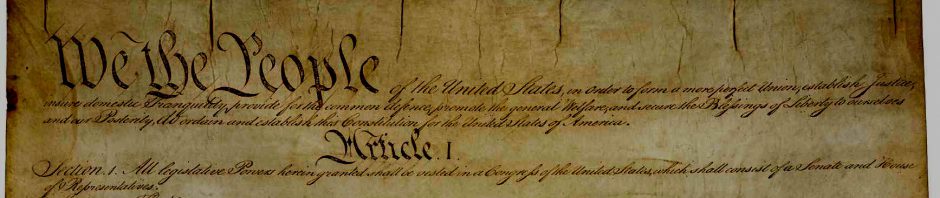
America’s Constitution specifically provided for separation of Church and State. In theory, at least, churches and other religious organizations that apply for tax exempt status cannot be overtly involved in politics, although Donald Trump’s MAGA movement has aligned itself with something called Christian Nationalism. According to Wikipedia, “Politics in Israel are dominated by Zionist parties. They traditionally fall into three camps, the first two being the largest: Labor Zionism, revisionist Zionism, and religious Zionism. There are also several non-Zionist Orthodox religious parties and non-Zionist secular left-wing groups, as well as non-Zionist and anti-Zionist Israeli Arab parties.”
This is a very significant difference from what Americans are familiar with. Zionism is an international movement to create, support, and defend a homeland in Palestine for Jewish people. As such, it involves politics, diplomacy, religious beliefs and military actions. Unlike in America, there is no separation of Church and State in Israel. Quite the opposite – Israeli politics and the government itself are often dominated by religious views and disagreements. This is problematic because the Israeli political parties dominated by orthodox Jews are also its most hawkish, militant, and anti-Palestinian, and it is these smaller parties that keep Prime Minister Benjamin Netanyahu in power. His right-wing Likud Party can only govern with the support of a coalition that is dominated by groups like orthodox Jews who would rather live in a constant state of war with their Arab and Palestinian neighbors than find a solution that guarantees peaceful coexistence.
We may not like that situation, but it is typical of ethnic and political conflicts that exist around the world, except for one very important difference. The orthodox Jewish Zionists, like the Haredi Jews who constantly beat the drums for war in Israel, also claim the right to be conscientious objectors. They fight tooth and nail to send the IDF to fight, but claim that their religious studies of the Torah exempt them from all military responsibilities. Israeli courts have generally granted exemptions to right-wing Zionists who apply on religious grounds, thus allowing politicians and policy-makers to send their fellow countrymen and women off to war while they stay safe at home.
That may change, however, as the Israeli version of our Supreme Court ruled yesterday that orthodox Jews will no longer be exempted from military service. With the departure of opposition leader Benny Gantz from Netanyahu’s war cabinet, it is now dominated by the Zionist religious parties for whom conscientious objection has been a non-negotiable demand. Netanyahu has been trying to force legislation through his legislature to codify military exemptions for their members to enable him to remain in power.
I wonder if the Zionists’ appetite for war will wane when they face the reality of having to do the fighting themselves. They do not represent the views of the majority of Israelis any more than the MAGA movement represents a majority of Americans. The world is waiting to see whether Netanyahu’s coalition can survive the ruling on conscientious objection, and whether a new coalition that truly represents all of Israel will have a different attitude toward its war in Gaza.


 America the Beautiful
I find it ironic that the ultra orthodox who don’t want to fight yet demand everyone else does, also are responsible for attacking Palestinians in the West Bank, destroying aid trucks going to Gaza and the West Bank, and think nothing of throwing stones. It’s about time they lose their exemption.
I’d call it criminal over ironic.