Trump on the World Stage

Alan Zendell, June 12, 2018

No, I’m not writing about the Trump-Kim Singapore summit. You’ve already heard enough from pundits who know a lot more than I do about it, yet despite that, no matter who is espousing wisdom, it seems to boil down to, “We’ll just have to wait and see.”

However, something else is becoming clear in light of the last few days of Trump-style diplomacy. For months, those very same “experts” have been shaking their heads in wonderment. Why, they ask, does Trump treat our adversaries with so much respect, often warmly praising them, while he is so crudely offensive to our allies? If we simply pose the question differently, and I think more accurately, the answer becomes clear.

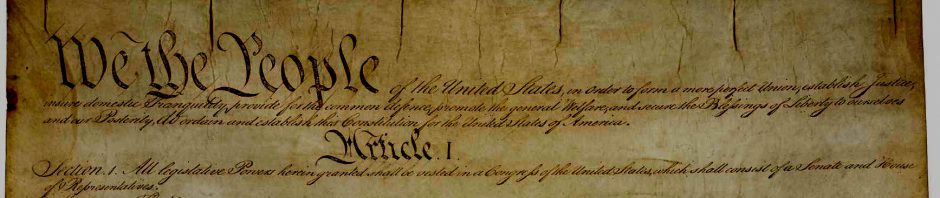
The issue isn’t adversaries versus allies as much as strength and power versus weakness. Since the day he was inaugurated, Trump has clearly demonstrated a craving for unfettered power and authority. He chafes whenever he’s reminded that he shares power with the Congress and the Judiciary, so much so that he seems to have nothing but contempt for the Constitution he swore an oath to defend.

That really shouldn’t surprise anyone, given what we know about his narcissistic nature and his utter disdain for rules and norms. He had a moment, yesterday, after his meetings with Kim Jong Un, which was both disarmingly honest and so arrogant as to defy words, when he acknowledged that six months from now he might have to accept that he was wrong to trust his gut feeling about Kim’s good faith. But then, as if remembering who he is, Trump added, “I don’t know that I’ll ever admit that, but I’ll find some kind of an excuse.” And therein lies the answer the pundits have been seeking.

In Trump’s mind, being a leader means never having to admit he’s wrong. It means always finding a way to claim victory, even when he loses. It means never having his word or authority challenged. He may personally decry the murders carried out by Kim’s henchmen, the lack of individual rights in North Korea, and the false commitments made by decades of North Korean regimes, yet at a different level, Trump craves autocracy and admires Kim’s ruthless control of his enemies. Trump thinks he should be entrusted with godlike power, which only he would know how to wield benevolently for the good of everyone.

Look carefully at the leaders he seems to respect, and ask yourself what they have in common: Kim, Vladimir Putin, Xi Jinping, the Ayatollah Ali Khamenei. All very different in nature, they are alike only in that they rule with virtually absolute power, at least until the next coup brings one of them down. It’s that power that Trump lusts after and makes him admire, perhaps even adore them as leaders.

Compare them with the leaders he treats with contempt: Justin Trudeau, Teresa May, Emmanuel Macron, Angela Merkel. What they have in common is that they all represent some form of constitutional representative government. They must stand for re-election, put up with vocal and outspoken opposition, and accept they will not always get their way. When Trump looks at them he sees only weakness, which angers him and causes him to disrespect them. The elected leaders of our traditional allies are not the kind of people Trump wishes they were, nor are they people he aspires to emulate.

Perhaps the best example is Moon Jae-in, the current president of South Korea. He too must stand for election and in his country, leaders are actually impeached − in fact that’s how Moon became president. He’s polite and soft-spoken, which to Trump makes him seem even weaker than the others. Consider how he treats Moon. When Trump initially canceled the Kim summit, he didn’t even have the courtesy to alert Moon ahead of time, although Moon did more to assure that it would happen than anyone. And yesterday, when Trump promised Kim that there would be no more war games with the South Korean military, Moon was again blindsided.

It’s no wonder that Trump thinks he should be allowed to wage a trade war all by himself. He thinks he’ll win easily against our allies because he has no respect for them. And he thinks he will win against our adversaries because he is certain that they view him as their equal and will therefore have to negotiate in good faith with him, and of course, no one can negotiate deals like Donald Trump.

So there you have it, pundits. Donald Trump’s treatment of foreign leaders is a direct measure of the degree of autonomy they wield at home. It has nothing at all to do with morality, honesty, criminality, or humanity. It’s all about Trump’s worship of absolute power.

Posted in Articles | Tagged , , , , , , , , , , , , , , , , , | 1 Comment

King Donald

Alan Zendell, June 6, 2018

The frightening but inescapable reality is that in 2016 we elected a president who thinks he’s a king. More likely, he simply doesn’t know the difference. Schooled in the world of business and mentored by experts in the shadiest ways of achieving his ends, he still hasn’t grasped that it’s far more difficult to get away with overstepping legally established boundaries than trampling people in civil court where money generally rules.

But this isn’t just semantics – it’s dangerous. We fought a revolution to escape being governed by an absolute monarch, and people who cheer Trump on when he’s guilty of these excesses forget the lessons of history. His base doesn’t mind when he attacks Muslims, immigrants, judges he disagrees with, the “liberal” media, or his political opponents. They even cheer him on when he goes after the FBI and the rest of his own Justice Department.

It’s ironic that a large segment of his base believes Trump when he tells them he’s fighting to protect them from the tyranny of a corrupt system. What could be more corrupt than a small group of people wielding absolute power who are answerable to no one? That’s exactly the kind of despotism our founders freed us from when they overthrew the yoke of King George III.

There’s yet another irony here. As described on history.com, while George III was portrayed as an “inflexible tyrant…Parliamentary ministers, not the crown, were responsible for colonial policies,” though the king could have overruled their decisions instead of endorsing them. Today, in America, we have the reverse situation: a president who believes his power is absolute with a Congress that is too cowed politically to exercise its constitutional responsibility to apply required checks and balances.

But we’re starting to see cracks in congressional indifference, or cowardice as its harshest critics might put it. Last week, I noted that Congressman Trey Gowdy, who is not running for re-election, defended the FBI’s investigation of allegations of Russian interference with the election in defiance of the president’s assertion that they illegally spied on his campaign. Today, another prominent Republican, Senate Intelligence Committee Chairman Richard Burr said he agrees with Gowdy that the FBI’s actions were appropriate, and the president’s accusations are without merit.

Perhaps the strongest indication that congressional Republicans have not completely abdicated their responsibility to defend our institutions was Speaker Paul Ryan’s statement that there is nothing to support Trump’s claims. Ryan is also leaving the Congress, but publicly implying that Trump is wrong is a clear departure from his typical refusal to say anything to challenge the president’s authority.

The issue that may finally cause Republicans to stand up to the president is trade. Trump seems to be on a one-man crusade to fight a trade war with adversaries and allies alike. But the tariffs he has announced have stirred up considerable discomfort among his own party. Free trade has always been a consistent plank in Conservative platforms, and many Conservatives in Congress are feeling heat from their constituents, much of which is fueled by the Koch brothers. If fear of losing their seats in November is what has prevented them from confronting Trump until now, they may be trapped between the classic rock and hard place.

Long-time Conservative Senator Bob Corker, who has also decided not to seek re-election, is working on legislation to negate what he described as the “president’s abuse of the powers granted to him under a National Security Waiver.”  The intention is to push back against tariffs and the inappropriate use of laws that were never intended for the purposes Trump is applying them. In a lengthy phone call, today, the president angrily insisted that Corker back off from trying to curb his power to wage a trade war. Corker responded, “I am a United States senator, and I have responsibilities and I’m going to continue to carry them out.”

This is a very hopeful first step in curbing Trump’s march toward autocracy. Read the history of the post-World War I Weimar Republic in Germany, which functioned effectively for fifteen years until Adolf Hitler seized dictatorial powers and subverted it to his own ends. Hitler could only have done that with the compliance of an ineffectual Reichstag (legislature). If that doesn’t set off alarm bells, you’re in a coma.

Still not convinced that Trump will grab every bit of power he can until someone stops him? Consider what unnamed White House sources have described as his obsession with pardons. Presidential pardons were intended by our founders as acts of forgiveness, not attempts to intimidate enemies or encourage people who committed crimes to remain silent to protect the president. But Trump’s total disregard of propriety and rules, combined with his boundless narcissism make presidential pardons irresistible to him.

As one commentator put it today, the presidential pardon is the last remaining holdover of the British monarchy system, an opportunity to yield absolute power that no one can challenge. Is it any wonder that King Donald is so enamored with the process?

Posted in Articles, Uncategorized | Tagged , , , , , , , , , , , , , , , , , | 1 Comment

Above the Law?

Alan Zendell, June 4, 2018

Three years after he resigned the presidency, Richard Nixon sat for four televised interviews with noted journalist David Frost. At one point, Frost asked Nixon, “Would you say that there are certain situations…where the president can decide that it’s in the best interests of the nation, and do something illegal?” Nixon replied, “Well, when the President does it that means it’s not illegal.”

Donald Trump’s legal team like to refer back to that interview to remind people that Trump is not the first president to make the argument that he can do things that are illegal without liability for prosecution. Nixon went on to remind Frost that where the president is concerned there are other remedies: he must stand for re-election, he must obtain funding authorization from Congress, and he can be impeached.

Trump’s attorney, Rudy Guiliani made a similar argument last weekend while discussing whether the president has the legal right to pardon himself. Nixon had raised that question too, and in an August 5, 1974 opinion, Mary Lawton, Nixon’s Acting Assistant Attorney General in charge of the Office of Legal Counsel wrote, “Under the fundamental rule that no one may be a judge in his own case, the President cannot pardon himself.” She also noted that the president had the option to declare himself unable to continue in office under the 25th Amendment, which would allow the Vice President (as Acting President) to pardon him.

The issue of the president pardoning himself arose out of the debate over whether he could be indicted for committing illegal actions while serving in that office. That question had also been previously addressed by the Justice Department’s Office of Legal Counsel. On October 16, 2000, Assistant AG Randolph Moss wrote, “…all federal civil officers except the President are subject to indictment and criminal prosecution while still in office; the President is uniquely immune from such process.” This decision was in support of a Justice Department ruling, the previous year, “…that the indictment or criminal prosecution of a sitting President would impermissibly undermine the capacity of the executive branch to perform its constitutionally assigned functions.”

In the same vein, Nixon had told Frost that sometimes a president must order actions that are technically illegal in the interests of national security, in part to shield subordinates who are charged with executing those orders. That’s important, because it defines an extremely narrow context in which illegal acts taken by a president might be appropriate.  It’s even more important now, because President Trump’s view of presidential power and authority seems to suggest the president can do anything he pleases with complete impunity. Even Nixon never made such a claim.

Neither of the Justice Department’s policies cited above has been tested in court, and they place no restrictions on the scope of the Mueller investigation. Mueller’s charge from the Deputy Attorney General includes the investigation of anything arising from the initial question of possible collusion with Russia during the 2016 election campaign.

All this is currently being discussed because, as Guiliani candidly admitted, the president’s legal strategy is that even if Mueller finds evidence that Trump is guilty of obstruction of justice, he cannot be indicted or prosecuted. Guiliani says the only remedy would be impeachment, and that would throw the entire discussion into the political arena of the 2018 mid-term elections. The assumption is that a House of Representatives dominated by Republicans would never impeach the president, but should the balance of power shift to the Democrats after the election, that might change.

The president’s strategy counts on assuring that Republicans retain control of the House, which is problematic for two reasons. First it ignores the fact that it was Nixon’s own Republican party that forced his resignation by telling him they were prepared to impeach him for obstructing the Watergate investigation and attempting to cover up his own involvement in a number of illegal actions. There might just be enough integrity in the current Republican-controlled Congress for the same thing to occur if Mueller’s final report is sufficiently damning.

But by far, the more important point is that permitting a president to act with impunity, regardless of the technicalities of what the Constitution intended, is a slippery slope that must ultimately result in disaster for our nation. It’s clear that the spirit of our Constitution requires a president who does not have ultimate, unrestrained power who is not above the law. No president can be allowed to disregard all of the established norms of behavior, procedures, and common decency that have protected us from tyranny for two-and-a-half centuries.

Guiliani appears to be saying, “Let the voters decide,” and perhaps he’s right. In the end, it’s our responsibility. We created this monster, and it’s up to us to shackle it.

Posted in Articles | Tagged , , , , , , , , , , , , , , , | 2 Comments

Trade Wars

Alan Zendell, June 1, 2018

It seems that Donald Trump was serious when he said trade wars are good, although his chimeric, narcissistic nature suggests that we should not infer anything specific until it actually happens. Talk is cheap, and it’s worth even less when successive statements continually contradict each other,

Trade war talk has been on again, off again since the day Trump announced his candidacy for president. Initially it consisted of vitriolic verbal attacks on China and its leaders, but rapidly expanded to include the North American Free Trade Agreement (NAFTA) and the Trans-Pacific Partnership (TPP), basically an all-out assault on the concept of free and open world trade.

Although establishment Republicans were horrified by these positions, one by one, they caved in and got in line, as the Trump juggernaut gained steam. The conventional wisdom was that to some degree, Trump was just pandering to disgruntled voters who felt they’d been left behind by the establishment wings of both parties. Surely he’d never follow through on all his outrageous threats and ideas, would he?

It’s hard to know what goes on in the mind of Donald Trump though it’s clear that he’s driven by the belief that he’s better than anyone else at “fixing” the country. Casting himself in the role of the hero America needed to be great again tapped into simmering anger and resentment in what came to be known as his base. Unfortunately, much of that anger and resentment was racist, ultra-nationalistic, and xenophobic, which gave his base a rabid, explosive quality.

Perhaps Trump meant all those things he said. Maybe he wasn’t only pandering. Or maybe he created a symbiotic monster that he can’t escape. Maybe his lust for power is so great that the fear of losing his base is now the only thing driving him. His base feeds on the slurs and insults he throws out at the people Trump tells them are responsible for everything they’re angry about. And he in turn feeds on their adoration. It’s an addictive cycle that might be impossible for a megalomaniacal narcissist like Trump to break.

Maybe that’s what made him decide to follow through on his trade war threats. No other explanation makes any sense. We’ve already heard from American soybean farmers, beer makers, and whiskey distillers that Trump’s tariffs will raise their costs and reduce their profits – that is, if they don’t ruin their businesses completely. Everything gets more expensive when diesel and gasoline prices rise, and Trump’s policies on trade, Iran, and the environment could combine to form a perfect storm that triggers an inflationary spiral in energy costs. And all that may be just the tip of the iceberg in terms of the damage he can do at home.

But what of the rest of the world? Martin Kettle, writing in the Guardian today, expressed the concern of many of our European allies: “Trump’s trade war threatens global peace.” He views Trump’s tariffs as a declaration of war against Europe, and gives voice to a growing belief that “the disruption that [Trump] has deliberately inflicted on Europe marks a turning point. It declares us America’s enemies.” That’s not just rhetoric. Europeans have felt the brunt of Trump’s America First populism since the day he took office and now worry that they can no longer depend on a strong Atlantic alliance.

Columbia University Professor Jeffrey Sachs writes that “Trump is rapidly destroying American global leadership, alliances, and interests.” His tariffs on steel and aluminum appear to be a direct assault on Canada and the European Union, and his continuing insults directed at Mexico serve no purpose other than red meat for his political base. Professor Sachs laid out what he sees as the consequences for such actions: “Harming our closest allies … and provoking retaliation cannot possibly deliver higher wages, better jobs, or an improved trade balance. Trump’s latest notion to slap tariffs on German automobiles would be even more damaging geopolitically.” The EU will fight Trump in the World Trade Organization’s trade court, though it would surprise no one if Trump told them to go to Hell.

For no explicable reason, Trump seems to take particular delight in targeting Canada. Canada? Pretending to be interested in re-negotiating NAFTA, he has imposed a condition that he knows Canada cannot accept, though its value to the United States other than political is hard to discern. He now insists that any revised NAFTA agreement contain a five-year sunset clause, which Canadian Prime Minister Justin Trudeau had said Canada would never accept. Trudeau further labeled Trump’s tariffs on Canadian steel and aluminum “totally unacceptable,” saying retaliation against the United States is necessary.

We haven’t heard words like that coming out of Canada since the French and Indian War.

Posted in Articles, Uncategorized | Tagged , , , , , , , , , , , , , , , , | 1 Comment

Gowdy, the FBI, and the Justice Department

Alan Zendell, May 30, 2018

It happens over and over again. Republicans in Congress who intend to run for re-election feel inextricably tied to President Trump politically, though many, perhaps most, find his words and behavior despicable. We’ve seen the cycle play itself out several times this year as one after another, they realize they no longer have the stomach to serve this way. Constantly bombarded by high disapproval numbers over Congressional dysfunction and gridlock, it’s not difficult to understand why so many talented professionals would want to return to careers that were more satisfying and productive.

It no longer seems remarkable that the moment they make the decision to leave the Congress their loyalty to Donald Trump evaporates like a wisp of steam. We saw it with Senators Jeff Flake and Bob Corker, among others, and now we see it with Trey Gowdy of South Carolina, the Chairman of the House Oversight Committee. A staunch Tea Party Conservative, Gowdy was no friend of either the Obama Administration or Hillary Clinton. Chairing the House Select Committee on the tragedy in Benghazi, he attacked Clinton relentlessly for more than two years, and even recommended that she be prosecuted in the death of Ambassador Chris Stevens.

He wasn’t a strong supporter of Donald Trump’s candidacy for President, but ultimately got on board when Trump won the nomination, and he has publicly been a loyal if not vocal supporter of the president. But now that he has decided to leave the Congress, the lawyer and former prosecutor could no longer remain silent about Trump’s unceasing attacks on the FBI, Special Counsel Robert Mueller, and the investigation into Russian interference with the 2016 election.

Agree with his politics or not, and I don’t, one has to respect his integrity. Once again, a conservative Republican of conscience has come forward to debunk what he sees as the destructive actions of a self-serving president who recognizes no boundaries of decency and seems not to care about the damage he does to our basic institutions to further his own ends.

Gowdy wasted no time in defending the FBI against Trump’s attacks. In a Fox News interview, he said he was “convinced that the FBI did exactly what my fellow citizens would want them to do when they got the information they got, and that it has nothing to do with Donald Trump.” He further noted that Trump himself said the FBI needed to investigate any possibility that someone in his campaign might have colluded with the Russians.

Gowdy’s remarks on the network Trump loves were a clear repudiation of the president’s claims that the Russia investigation is a witch hunt. They also contradicted the baseless assertion by the president that the FBI had inserted a spy into his campaign to undercut his election. The remarkable thing is that these revelations do nothing to move those red state Republicans in Congress who still have to stand for re-election. Their fear of the mindless devotion of Trump’s base continues to compromise their integrity and prevent them from carrying out their Congressional mandate to serve as a check on excesses by the Executive Branch.

We hear many predictions of a looming constitutional crisis as a direct confrontation between Trump and Mueller approaches. Trump’s recent hiring of Rudy Guiliani as his chief attack dog has only exacerbated the situation, as he freely admits in interview after interview that Trump’s attacks on Mueller and the FBI are purely political appeals to his base. Guiliani dodges questions about any evidence that might support Trump’s attacks, instead explaining that the matter is not a legal proceeding but a direct attempt to influence public sentiment.

In the end, Guiliani concedes, the real issue is whether the president can or will be impeached, and in that arena, laws and rules matter less than approval ratings in red states with House seats up for grabs next November. Guiliani is correct about that, which only makes Trump’s behavior more despicable. As the president has always said, the only thing that matters to him is winning. Not the Constitution, not the integrity of our law enforcement agencies or our Justice Department, and not the protection of our democracy that he has sworn to defend.

This close to the election, it seems unlikely that any Republican who wants to keep his or her seat will speak out against the president, no matter what concerns they may express in private. And that is probably the worst indictment of this president’s behavior. Now it’s up to the voters. Will there be enough of them willing to defeat the Trump sycophants who care more about their careers than the future of the country?

Let’s hope so.

Posted in Articles | Tagged , , , , , , , , , , , , , | 1 Comment

Disingenuousness and Hypocrisy

Alan Zendell, May 25, 2018

“Our presidency has been debased,” was the startling message delivered to the graduating class of Harvard Law School yesterday by Conservative Arizona Senator Jeff Flake.

Upon taking office Donald Trump, like every other president, embraced this oath: “I do solemnly swear (or affirm) that I will faithfully execute the Office of President of the United States, and will to the best of my Ability, preserve, protect and defend the Constitution of the United States.” But, Senator Flake went on to say, our president has only a passing understanding of the Constitution, and by attacking our basic institutions and attempting to silence all opposition, he does serious damage to the democracy he swore to protect.

I agree with Flake’s assessment, but the problem goes much deeper. Trump’s presidency is based on disingenuousness and hypocrisy. For example, as one of my friends recently pointed out, the so-called Freedom Caucus has called Trump the president who has done the most to support the right to life wing of the Republican Party. They will bring every resource to bear to assure that any viable fetus comes to term, but once the baby is born, it’s a different story.

Programs designed to assure that all children receive proper nutrition, medical care, and safe housing are constantly under attack by those same Republicans, and our president does nothing to stand up for the children. When innocent kids are gunned down in their schools, not a single member of that political caucus has the courage to call a spade a spade and stand up to the gun lobbies that know no restraint. President Trump decries such tragic acts of violence and declares that he will fix the problem if the Congress is too cowed by the NRA to act, but in the end, it’s just lip service.

When Trump wannabes in several states slash school budgets and teachers’ salaries and retirement systems, does our president speak out to prevent the harm done to our children’s education? And what about those DACA kids, who the president swore to treat with compassion, and the children of illegal immigrants who are being separated from their families with his express approval? Donald Trump, who told us he’s so rich he can’t be bought by special interests, caves in constantly to the darker elements of his voting base.

He champions racists and pedophiles and has the morals of a common street hooker. He is enamored with dictators but repeatedly insults our long-term allies. Our presidency has not only been debased, it is devoid of principles.

Trump claims the economy is booming, but tell that to the working class portion of his base who don’t benefit from a surging stock market. His executive orders have caused health insurance premiums for the middle class to skyrocket, while mortgage rates have steadily increased since last September, (thirty year fixed-rate mortgages have jumped 23% and fifteen year mortgages have risen 35%.) Gasoline prices have jumped 12% since Trump said he was going to scuttle the Iran nuclear deal, the only noticeable effect of the sanctions he re-applied. The financial services firm Morgan Stanley estimates that the rise in gas prices has already wiped out one third of the savings many Americans saw from last year’s tax reduction law.

For all the vaunted claims of America’s strong hand in the Trump-instigated trade war, we’ve seen no change in the things he screamed loudest about during his campaign. If China was raping us in trade before, what’s different now? Have they stopped stealing our intellectual property? The only tangible effects of Trump’s actions on trade thus far are the concerns of Midwest soybean farmers who sell 80% of their crops to China. Many fear their farms will be bankrupted by Trump’s tariffs.

Trump’s trade war has done nothing to open China’s door to American-made automobiles, and that, combined with his relentless attacks on regulations designed to prevent long-term damage to our environment, is destroying the market for small, efficient cars. As a result, General Motors is cutting 1,500 manufacturing jobs in Ohio.

At least, some of my friends who support Trump tell me, he’s on a track to solve the most dangerous issue we face – North Korea. But are we? Trump’s tendency to over-react and exaggerate, combined with his undisciplined ignorance about diplomacy have resulted in complete chaos once again. Imagine South Korean President Moon’s reaction when he was blindsided by Trump cancelling the meeting with Kim Jong Un that Moon had brokered.

Very few administrations have been good at telling the truth, but at least most of them had the good sense to keep things under wraps. The Trump administration seems to thrive on public displays of hyperbole and misinformation. What’s worse, we’re becoming numb to it, and that’s a real danger with the mid-term elections approaching. If we accept the Trump administration’s behavior as the new normal, we put all our children’s futures at risk.

Posted in Articles | Tagged , , , , , , , , , , , , , , | 1 Comment

Putin Got Everything He Wanted

Alan Zendell, May 12, 2018

It’s finally clear what the Russians were up to during the 2016 election. Facts that have come to light in the last couple of weeks make it clear that their primary objective was sowing discord among Americans. By exacerbating hot button issues like guns, jobs, religious differences, and crime, often posting incendiary articles on both sides of an issue, they seem to have achieved their objective.

What’s remarkable is the sheer number of items published, mostly on Facebook, hundreds of thousands of posts, skillfully conceived and orchestrated throughout the election campaign. The project was so well conceived and executed we had no idea we were being fleeced. And look at the result: our confidence in social media has (perhaps justifiably) been eroded, our mid-term elections are approaching with no guarantee that we’ll be any smarter or any more hack-proof than we were two years ago. And as a nation we are angrier and more divided than at any time since Vietnam, maybe since the Civil War.

The Russians didn’t create our divisions. They always existed, but Putin’s brilliant team of psychological warfare specialists working from Saint Petersburg picked at them like old scabs, and we bled. And Putin proved once again what a dangerous and unscrupulous adversary he is.

What we’ve learned also tells us a lot about the likelihood that there was collusion between the Trump campaign and the Russians, and the degree to which that may have influenced the outcome of the election. Despite the incompetent attempts to obtain dirt on Hillary Clinton from the Russians by DT Junior, I think it’s now clear that any collusion that may have occurred was instigated by the Russians. Surely there was some on the part of Trump’s surrogates, but it seems extremely unlikely that it represented a scheme conceived by the president. That would imply that he’s as politically savvy and smart as Putin, and he’s not.

The fact that of the hundreds of thousands of attempts to influence Americans on social media, a sizable percentage were pro-Clinton, tells us disruption was a more important goal than favoring one candidate over the other. Still the preponderance of Russian meddling favored Trump. When it was first suggested that Putin wanted Trump to win the election, several possible explanations flooded the media.

Did Putin have something on Trump that would give him leverage over him? Maybe, but sixteen months of Trump as president make it pretty clear that embarrassing Trump is a tall order. Whatever else he may be, he’s totally shameless, and a president who continually invents his own facts and lies openly is not easy to blackmail.

Many people promoted the idea that Putin thought Trump would be easy to manipulate. Trump proved early on that he was easily baited and his use of Twitter is if anything, undisciplined. There’s no doubt that Putin is a master of politics and international relations, and that he feels he has no equal among other world leaders. He probably does believe Trump can be had, but there’s no reason to believe he doesn’t feel the same way about Clinton. And given Trump’s volatile, nasty nature, the deliberate, cautious Putin might well have preferred dealing with the steady, predictable Clinton in some ways.

The truth is we don’t need to look any further than Putin’s main objective to understand why he wanted Trump to win. It fits perfectly with his overall objective – maximizing discord and divisiveness among Americans, because nothing could have been more divisive than Trump as president. With a dysfunctional Congress in Washington and a divided electorate, Putin knows he can choose his battles and pick us apart wherever we’re weak.

It’s not about Putin wanting to destroy us, it’s about economic and diplomatic dominance. With our trade relationships in question, our traditional alliances far less certain than they were two years ago, and our basic democratic institutions constantly under attack by Trump, Putin has achieved everything he wanted.

And all this time as Trump screams that there was no collusion and Mueller’s investigation is a witch hunt, the irony is that Trump is probably innocent, but he’s not innocent of all the other things he’s accused of. He’s being masterfully baited and he steps into every trap that’s set for him. His own words told us he is a sexual predator. His actions tell us he thinks he can quash anything he doesn’t like the way he did in business, and these things may ultimately emasculate his administration.

Will he be impeached or indicted? Probably not, but as he runs roughshod over every institution in Washington, he will find himself more and more isolated. It took several years to develop, but there came a day in 1974 when the leaders of Richard Nixon’s Republican party told him they could no longer support him, and he resigned. Could that happen to Trump? Most of the Republicans in Congress have no love for him. They tolerate him and support him purely out of expediency. Let’s see what happens as the mid-terms approach.

Posted in Articles | Tagged , , , , , , , , , , , , | 1 Comment

Stability

Alan Zendell, May 10, 2018

We know from physics that there are several ways to achieve stability in physical systems, and that principle translates well into the world of politics and human affairs. One way to achieve stability is for a system to be completely at rest, affected by no forces, internal or external. That model clearly does not apply to anything in our real world.

There are two models that do, however. One, which I’ll call Model A, is a system that is dominated by a single overwhelming force. It will remain stable as long as no other significant forces are present. The other, Model B, is a system in which many forces of different types and magnitudes are present, but they are kept in a state of near-equilibrium. Both systems can be de-stabilized if energy is not applied in just the right way to maintain them.

The analogy for Model A in international relations is a world in which one country is so dominant, militarily and economically, that it can consistently impose its will on every other country. The analogy for Model B is a world of interconnected, interdependent relationships in which each nation finds enough benefit that it has an incentive to maintain the status quo. People who support free trade, open boundaries, and few or no tariffs favor Model B, and prior to the 2016 election, the United States was a positive force pushing the world in that direction.

Objectively speaking, the Trump administration has so far done everything possible to reverse that trend. It has attempted to close our borders and restrict the flow of immigrants. It has withdrawn or attempted to tear down free trade agreements in both the Western Hemisphere and the Pacific Rim and withdrawn from a worldwide agreement to reduce carbon emissions. It has alienated its NATO partners, and now it has unilaterally withdrawn from the Iran Nuclear Agreement in complete disregard of the wishes of our traditional allies. Everything about this administration has had an isolationist tone and reflected a go-it-alone attitude combined with a Model A belligerence that says, “Might Makes Right” to the rest of the world.

While acknowledging that I favor Model B, I grant that there is a lot that can be debated in favor of both models, and here is where the physics analogy may at least illuminate issues, free of emotion and politics.

Model A will work as long as the dominant nation remains dominant. In physics that requires a constant application of energy which can only occur at the expense of something else. In any closed system energy is a zero-sum game, and the same is true in politics and international relations. We’ve seen what happens whenever any nation achieves dominance and tries to maintain it over time.

In modern times, consider the British Empire, the fascist regime in Germany, the Japanese expansion in the first half of the twentieth century, and the Soviet Union. The cost of staying on top is invariably self-destructive, and over the long run, the result is always the same. We see the same forces at work in North Korea, where even in a relatively closed society, the contrast between asperity in the North and prosperity in the South have forced Kim Jong Un to realize that the path he was on was unsustainable. Unsustainability, the polar opposite of stability, is also precisely the lesson we learn from physics.

That’s not to say that Model B is easy to sustain. Maintaining equilibrium among numerous competing forces is a complex and risky game. But free trade and openness at least provide all parties with an incentive to compromise, where bullying through greater strength only causes anger and resentment. In human interactions, the masses will invariably bring the bully down. No single nation can stand against the combined anger of others aligned against it, and that’s the risk we take going down Trump Highway.

It’s always fun to watch someone rebel against a corrupt, inefficient system. Humans love an underdog, even if he’s an immoral billionaire, at least until it all comes crashing down around him. And what if in his own way, he turns out to be just as corrupt as the people he defeated? That’s another classic feature of human nature – history tends to repeat itself.

To be fair, Trump may turn out to be the hero he thinks he is. Maybe the Koreas will re-unite, and when they do Trump will get much of the credit. Maybe Iran will decide to play nice with the rest of the world. Maybe, somehow, Israel’s neighbors will end their undeclared war against them and choose to prosper from Israeli technology.

All of those things could happen, but physics tells us that we’re better off learning to balance competing forces attempting to create a whole that’s bigger than its parts than trying to win at everyone else’s expense.

Posted in Articles | Tagged , , , , , , , , , , , , , | 3 Comments

Pants on Fire

Alan Zendell, May 6, 2018

He’s lied his entire life – it’s well documented. He’s made promises he never intended to keep and defrauded people all his life. That’s well documented, too.

He lied when he said he couldn’t release his taxes because they were under audit; the IRS said that was nonsense. He lied again when he said he’d release them when the audit was done, then changed his mind. He lied when he told average Americans that the tax bill he supported was primarily aimed at lowering their taxes and then helped pass a bill that was aimed almost entirely at increasing corporate profits. He lied when he said that would cause corporations to share their tax windfall with employees; the great majority of those profits have simply been spread among their stockholders.

He lied when he claimed his “travel ban” wasn’t a Muslim ban, and the courts threw it back in his face. He lied when he said he supported the DACA kids, then tried to slam the door on them at every opportunity. Now the courts have said that was illegal and given him ninety days to get it right.

He lied when he promised affordable health care to all Americans, but cheered on Congress’ attempts to pass laws that would have deprived nearly twenty five million people of any coverage at all. Then he took direct action to dismantle protections against premium hikes in Obamacare plans, because undermining his predecessor in the White House was more important than people not being able to afford coverage. And now, even Tom Price, his departed, corrupt DHHS chief who has made a career out of attacking attempts to expand health care for Americans states publicly that the new tax law will significantly increase health care costs for most of us.

He invents his own facts and calls most legitimate journalism “fake news.” He has been accused of sexual misconduct by more than twenty women, none of whom know each other, but in the face of credible testimony against him has called all of them liars. He has lied and contradicted himself repeatedly in the sordid cases of nondisclosure agreements with a porn star and a Playboy model.  

His supporters and detractors seem to agree that he has no respect for the truth. The only difference is that his supporters don’t seem to care. Republicans who have to run for re-election this November are between a rock and a hard place. They’re afraid that abandoning him will anger his base, but equally concerned that independent voters who have had enough of his lies will vote them out of office if they don’t speak out.

Some veteran Republicans, mostly those who are in no danger of losing their seats, are raising questions about the long term effects of his lies. Questions are now being asked about their impact on international relations. Will our allies treat his lies as nothing more than campaign and negotiating tactics and assume that when serious matters are on the table in private he can be trusted to keep his word?

The problem isn’t with our adversaries. Putin and Xi don’t care if he lies. All that matters to them is increasing their influence in world affairs and economics as relations between Trump and our allies deteriorate. He’s reneged on trade agreements and backed out of the worldwide attempt to control carbon emissions and protect our environment. And now he’s threatening to tear up the Iran nuclear agreement even though his is nearly a lone voice in the wilderness. His only ally on this matter, Israeli Prime Minister Netanyahu, is at odds with his own military and security apparatus.

Soon he will be sitting across a table from Kim Jong Un, whose belligerence has for years been based on distrust of America’s intentions. Why would he now believe an American president who declares that we have no intention of invading North Korea or upending his regime? In particular, why would he believe Trump, who has never been willing to pledge either of those things? And watching how Trump has treated our NATO allies, why would South Korean president Moon trust him to maintain our treaty commitments?

All that aside, what I am most concerned about is the effect of our president’s lies and basic lack of morality on our societal norms. Have your children ever said, “Why can’t I lie when the president does all the time?” What will you tell them when they do? What about when your business associates and colleagues treat commitments, contracts, and verbal agreements the way Trump does?

My greatest fear is watching our values erode. What will happen when cheating takes precedence over hard work? What will be left to defend our system if Trump is allowed to denigrate our courts and law enforcement? Our children deserve better than the legacy our president is creating for them.

Posted in Articles | Tagged , , , , , , , , , , , , , , , , , | 2 Comments

A Faustian Bargain

Alan Zendell, May 1, 2018

One of the clichés of modern life is “be careful what you wish for.” The problem isn’t so much with our wishes as with how far we’re willing to go to realize them, and once they’ve become actualized, with the Law of Unintended Consequences. It’s human nature to want what we don’t have, to dream and fantasize about things we believe will make our lives better.

But it’s also human to be shortsighted, especially when we’re driven by our emotions and so narrowly focused on the trees we lose sight of the forest. We’re most prone to error when we’re driven by baser, more powerful emotions like fear, greed, anger, or lust. It is then that we become susceptible to the serpent’s wiles. It is then that we are most likely to accept a Faustian bargain that will be our undoing.

Our founders did it when they permitted slavery, and the consequences nearly destroyed us in the Civil War. As our country grew in size and scope and wealth, we somehow blinded ourselves to the genocide we were committing against all of the native American peoples who stood in our way, and we live with that ignominy today.

For centuries, hardship, poverty, and oppression have made nations vulnerable to charismatic charlatans who promised they would solve their problems and make them rich and powerful. In the twentieth century, Faustian pacts with Fascists and Communists led to worldwide conflicts and produced the legacy of revolutions and petty dictators that we still contend with today.

In our own country we are living with the legacy of a generation of bad decisions and wrong-headed policies. The twenty-first century has seen problems that have gone unanswered for decades bring our nation to the brink of crisis in many ways.

Our failure to take energy independence seriously when that was inconvenient for our largest corporations kept us engaged in the Middle East because of oil, which drew us into seventeen years of misguided conflict that has done nothing to improve conditions in that part of the world. Corporate greed nearly brought down our economy ten years ago, a shock from which we’re still recovering. And today, as a nation we are putting short term comfort and profit ahead of what science tells us is the health of our planet and the lives of our grandchildren.

Even worse, we have ignored the growth of divisiveness and partisanship until they now threaten the fabric of our country. We’ve had our eyes opened to a level of hate and bigotry that most of us thought no longer existed in America. Our gridlocked, dysfunctional government has reneged on its promise of affordable health care, and we are rejecting the values we were built on, turning our backs on the immigrants that have made us what we are.

Have we made our own pact with the Devil? When Trump took office most Americans believed the greatest threat to our existence was North Korea. As the two Koreas seem to be on the verge of ending their sixty-eight-year-old war, we have to ask some serious questions. Did Trump make this happen or was he just a side show? South Korean President Moon was elected based on his pledge to do everything possible to end the war and re-unite Korea. It’s just possible that this is a family squabble that’s finally coming to an end on its own.

Our president’s buffoonery in Michigan taking full credit aside, he probably deserves some, no matter how offensive his behavior. And therein lies the problem. Because of his ego, because of his need to be a seen as a hero, because of his vulgar, uncouth manner, he distorts everything he touches, and more often than not leaves it in worse condition than it was before.

Even if we credit his rants against Kim as one factor in bringing the two Koreas together, I reject the idea that only Trump could have accomplished this. I’m not confident that his similar rants against Iran will accomplish anything positive – they may make things worse. And when I look at the way our president is ripping at the fabric of our basic institutions and making a mockery of common decency, I have to ask, “At what price? Is it worth it?”

The people who voted for Trump may well have made a pact with the Devil that we all have to live with. Like Faust, they seemed to get what they wanted for a while, railing against an establishment that had failed them, vicariously venting their anger at an obviously corrupted and obsolete system. But in the end, the Devil always gets his due. If we permit Donald Trump to destroy the moral fabric of our country, what will we have gained in the end?

Posted in Articles | Tagged , , , , , , , , , , , , , , , | 2 Comments